
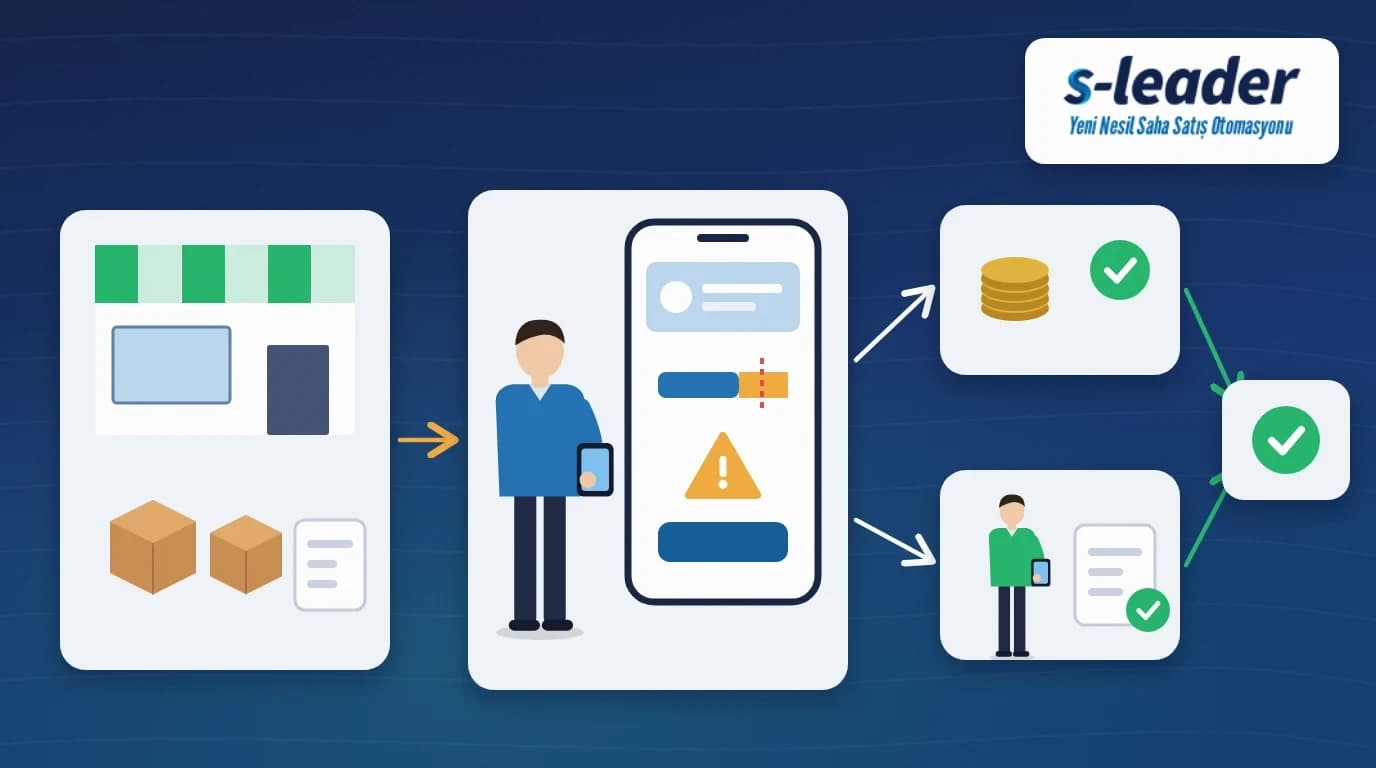
In short: A customer credit limit is the maximum amount a customer's total open balance, both due and not yet due, may reach. When a new order would exceed it, the rep's job is not to approve the order alone or turn the customer away, but to review the balance with the customer, free up the limit through a collection if possible, otherwise send the order for approval with a reason, and give the customer a clear answer.
A rep walks into a shop and the owner wants to place a bigger order than usual. A look at the account balance on the phone shows the open balance is already close to the limit, and this order would push it over. Entered as it is, the order increases the risk; refused without explanation, it damages the relationship. This article explains what a credit limit is and how to handle an order over the limit in the field, step by step.
What is a customer credit limit?
A customer credit limit is the upper bound of total credit a company extends to a customer on payment terms. It usually includes the open balance on the account, cheques and notes not yet collected, and orders waiting to be shipped. Which items count and how high the limit is depend on each company's credit policy and ERP settings.
The credit limit is decided by finance or sales management, not by the rep. The rep, however, applies it in the field: they talk to the customer, take the order and collect payment when needed. That is why a rep should be able to explain calmly and clearly why the limit exists.
Why are credit limits exceeded?
Knowing the cause helps the rep choose the right step. The most common causes in the field are:
- Late payments: overdue invoices have not been paid and the open balance has built up.
- Seasonal large orders: before holidays, at the start of a season or during a promotion the customer wants more stock than usual.
- Uncollected cheques and notes: documents received but not yet due make the risk look higher.
- Record differences: a payment was made but not posted, or the customer's records do not match the company's.
- Outdated limits: the customer's volume has grown but the limit has stayed the same for years.
If you suspect a record difference, reconcile the balance with the customer first; our customer account reconciliation article explains how.
Handling an order over the limit in 6 steps
1. Check the balance before the visit
See the limit issue before you reach the door, not at the counter. Looking at the open balance, the overdue amount and the last payment lets you start the conversation prepared. For the full morning routine, see our pre-visit preparation guide.
2. Review the balance with the customer
Instead of saying "your limit is full", go through the balance together. Show which invoices are open and which are overdue. If the customer says they have paid, ask for the receipt or document number; record differences often surface at this point.
3. Try to free up the limit with a collection first
The cleanest solution is to collect part or all of the overdue amount during the visit. Once payment is collected, the open balance drops and the order may fit within the limit. Our field sales collection tracking article covers how to record cash, cheque and bank transfer payments in the field.
4. Send the order for approval with a reason
If no payment can be collected or the limit is still exceeded, do not approve the order yourself. Send it to the authorised person together with the customer's payment history, the expected payment date and why the order is larger than usual. Our order approval workflow article explains how to set up that process.
5. Give the customer a clear answer
Tell the customer the order has gone for approval, who will decide and when. If needed, suggest splitting the order: the part within the limit ships right away and the rest follows after payment or approval. The customer does not end up with an empty shelf and the company keeps its risk under control.
6. Record the outcome and report the need
Whether the order is approved, rejected or split, write the outcome into the visit record. If the same customer hits the limit again and again, report it to your manager; that information is needed to decide whether the problem is payment behaviour or an outdated limit.
Common mistakes
Silently exceeding the limit: entering the order and waiting for head office to notice leads to the order being stopped on delivery day and a much angrier customer.
Turning the customer away without explanation: "the system won't allow it" tells the customer nothing. Showing which balance is open makes the conversation easier.
Promising terms or limits without authority: a rep saying "we'll raise your limit" creates a new problem when the promise cannot be kept.
Not checking for record differences: an amount that was paid but not posted makes the account look over the limit for no reason.
Not reporting repeated overruns: asking for approval case by case every time delays the conversation about the real problem.
How S-Leader supports the field team
How a credit limit is defined and how an order over the limit is handled depend on each company's credit policy and ERP settings. The S-Leader field sales app supports the field steps of this process. Reps see the customer's account balance, past orders and sales in the field instantly. Account movements and overdue and upcoming collections are shown in the app, and cheque and note due dates and amounts are calculated to plan collections. Orders and collections taken in the field are posted to Logo or Mikro ERP once approved. Custom reports built with the report designer can be used to monitor customers who often hit their limit.
Summary
An order over the limit is not a simple yes or no in the field but a process: see the balance before the visit, review it with the customer, try to free up the limit with a collection, otherwise send the order for approval with a reason, give the customer a clear answer and record the outcome. Contact us to see how S-Leader gives your field team access to balance and collection information on the road.
Sıkça Sorulan Sorular
Is a customer credit limit the same as a risk limit?
In everyday use the terms often mean the same thing: the upper bound of the total amount a customer may owe on payment terms. Some companies also include orders waiting to ship and uncollected cheques and notes in the risk figure; which items count depends on the company's credit policy.
Can a rep approve an order that exceeds the credit limit?
Usually not. Exceeding the limit is a finance decision and needs approval from the person the company has authorised. The rep's job is to check the balance, collect payment if possible and send the order for approval with a reason.
Should a customer over the limit get no order at all?
Not necessarily. A collection can free up the limit, the order can be split to stay within it, or a manager can approve it based on payment history. What matters is that the decision follows company rules rather than the rep's guess.
How often should credit limits be reviewed?
There is no fixed interval; the limit should be reviewed as the customer's volume and payment behaviour change. Customers who often hit the limit but pay reliably may be a sign that the limit needs updating.