
What Is Cold Selling (Pre-Sales)? Process and Differences from Hot Selling
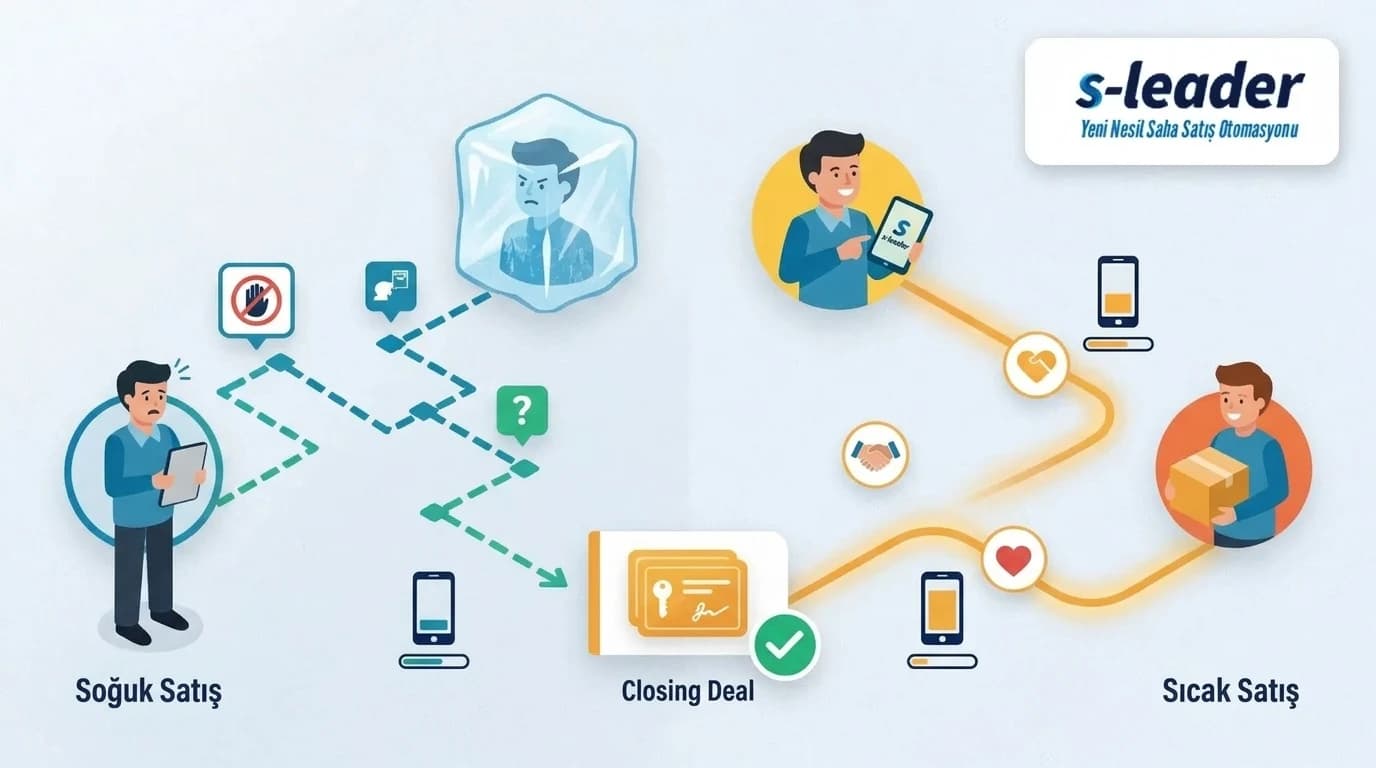
In short: Cold selling (pre-sales) is the sales model in which the field rep only takes the order during the customer visit, and the goods are delivered later from the warehouse in a planned shipment. The order is a delivery promise; keeping that promise depends on accurate stock information and on the order reaching head office quickly.
Businesses that distribute goods use two basic field sales models. In hot selling the product is delivered from the van during the visit. In cold selling the rep takes the order and delivery is planned as a separate step. This article explains what cold selling is, where it differs from hot selling, the steps of the process and the problems that occur most often.
Quick summary
- Cold selling = order during the visit, planned delivery from the warehouse afterwards.
- Pre-sales is another name for cold selling; both terms describe the same model.
- The rep carries no goods; the most important tool is up-to-date stock, price and account information.
- The later an order reaches head office, the more the shipment plan and the stock promise suffer.
- Cold and hot selling can be used together in the same business, for different product groups or regions.
What Is Cold Selling (Pre-Sales)?
Cold selling is the form of selling in which the field rep records the order at the customer's premises and delivery is made later from the warehouse. The rep's job is to visit the customer, identify the need and take the order correctly. Preparing, loading and delivering the goods is the job of the logistics team.
In this model the order is a promise. The customer expects the product to arrive on the agreed day and in the agreed quantity. If the rep cannot see current stock while taking the order, a promise is made for a product that is not in the warehouse. That is why success in cold selling depends on the accuracy of the information reaching the field as much as on selling skill.
Differences Between Cold Selling and Hot Selling
- Delivery time: In cold selling, delivery is planned after the order. In hot selling, delivery takes place during the same visit.
- Stock source: In cold selling, the order is fulfilled from central warehouse stock. In hot selling, sales are made from the stock on the van.
- The rep's vehicle: In cold selling, the rep carries no goods. In hot selling, the van acts as a moving warehouse.
- Product range: In cold selling, the full range of the warehouse can be offered. In hot selling, the choice is limited to what is loaded on the van.
- Documents: In cold selling, an order record is created during the visit; the delivery note and invoice are issued with the delivery. In hot selling, the document is issued during the visit.
- Main risk: In cold selling, the risk is a delivery promise that cannot be kept. In hot selling, the risk is van stock that is shown incorrectly.
The Cold Selling Process Step by Step
1. Preparation before the visit
The rep starts the day with a visit list ordered according to the route plan. For each customer, the open balance, recent orders and valid price list should be visible before the visit.
2. Taking the order
Products and quantities are entered at the customer's premises. Valid campaigns and discounts should be visible at this stage. The rep should be able to see at the time of ordering whether the warehouse can cover the quantity entered.
3. Sending the order to head office and approval
The order reaches head office and is approved according to the rules of the business. Credit limits, overdue debt and special prices are checked at the approval step. Sending the order at the moment it is taken, rather than in a batch at the end of the day, gives the shipment plan more time.
4. Stock allocation and shipment planning
Stock is allocated for the approved order. The warehouse prepares the goods, and the shipping team assigns deliveries to vehicles and routes. If stock is not allocated, the same product may have been promised to more than one customer.
5. Delivery, invoice and collection
The goods are delivered, and the delivery note and invoice are issued. Collection can take place on delivery or at the next visit. For details, see our article on collection tracking in field sales.
Common Problems in Cold Selling
- Outdated stock information: The rep takes an order for a product the warehouse no longer has, and the delivery arrives incomplete.
- Orders sent late: Orders written on paper or transferred at the end of the day miss the shipment plan.
- Double data entry: An order taken in the field is entered again in the office; time is lost and the risk of error rises.
- Wrong price or discount: An order taken with an old price list leads to corrections and disputes at the invoicing stage.
- Short deliveries that are not tracked: If items that could not be supplied are not recorded, the customer has to order a second time.
The common cause of these problems is that the field and head office are not looking at the same data. We explained how orders are transferred to the accounting system in our articles on Logo ERP integration and Mikro ERP integration.
Which Businesses Is It Suitable For?
Cold selling is the more suitable model in the following cases:
- The product range is too wide to fit on a van
- Orders are bulky or heavy
- Customers order at regular intervals and in a planned way
- Delivery requires a special vehicle or equipment
- The order has to be approved before delivery
Many businesses use the two models together. Fast-moving products are managed with hot selling, while a wide product range or large orders are managed with cold selling. What matters here is that the field application can support both models with separate rules.
Cold Selling Checklist
- Can the rep see current warehouse stock while taking the order?
- Do price lists and campaigns reach the field automatically?
- Is the order sent to head office at the moment it is taken?
- Are the credit limit and overdue debt checked at the time of ordering?
- Is stock allocated for the approved order?
- Are items delivered short recorded and followed up?
- Is the time between order and delivery measured?
The time in the last item and the rate at which orders are fulfilled in full are among the indicators a cold selling team should monitor. For other indicators, see our article on field sales team KPIs.
Cold Selling with S-Leader
S-Leader supports the cold and hot selling models within the same field team. The rep accesses the account balance and past orders in the field, and enters the order by scanning a barcode or selecting from the list. Valid campaigns are shown during ordering. Approved orders are recorded automatically in the Logo or Mikro ERP system, so the order does not have to be entered again in the office.
If you would like to see how you can simplify your pre-sales process, you can request a free demo.
Sıkça Sorulan Sorular
What is cold selling?
Cold selling is the sales model in which the field rep only takes the order during the customer visit and the goods are delivered later from the warehouse in a planned shipment. The rep carries no goods on the vehicle.
Are cold selling and pre-sales the same thing?
Yes. Pre-sales is another name for cold selling. Both terms describe the model in which the order is taken first and delivery is made afterwards.
What is the difference between cold selling and hot selling?
In cold selling the order is taken and delivery is made later from the warehouse. In hot selling the order and delivery take place during the same visit, from the stock on the van.
Why does stock matter in cold selling?
When taking an order, the rep makes a delivery promise to the customer. If current stock is not visible, a promise is made for a product that is not in the warehouse, which leads to short deliveries and dissatisfied customers.
Can a business use cold and hot selling together?
Yes. Many businesses use hot selling for fast-moving products and cold selling for a wide product range or large orders. The field application needs to support both models.
How does the order reach head office in cold selling?
With field sales automation, the order is sent to head office at the moment it is taken on the mobile device and recorded in the ERP system. In teams working on paper, the order is entered again in the office, which creates delay and a risk of error.