
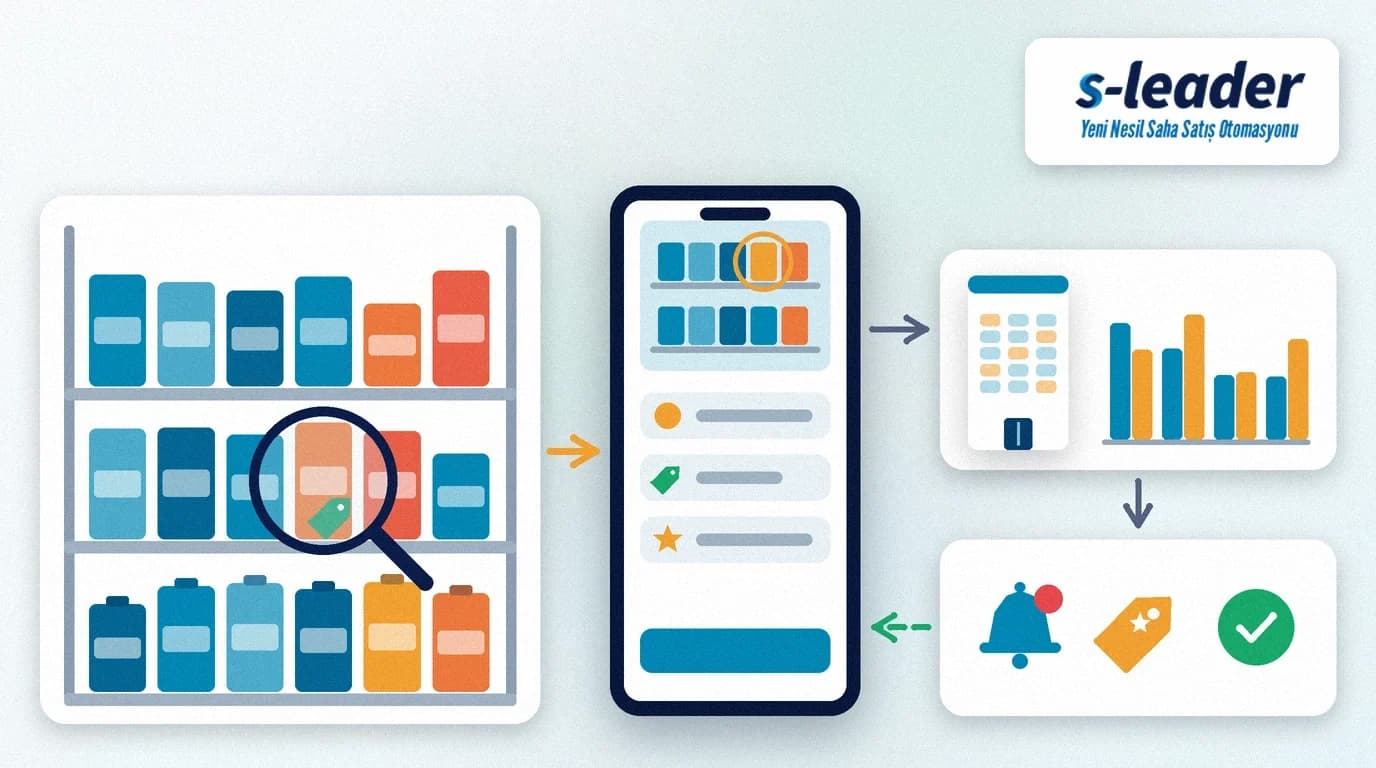
In short: Competitor monitoring in field sales means that reps record rival brands' shelf prices, promotions, new products and shelf position at the outlets they visit, in one standard format, and pass them on to head office. The aim is to turn scattered observations from the field into structured information that sales management can act on.
A rep walks past dozens of shelves every day and is often the first to notice that a competitor has new packaging, has cut a price or has started a "buy three, pay for two" offer. These observations usually stay in conversation and are only remembered weeks later, when sales drop. This guide explains step by step how the field team collects competitor information, how they pass it on and how head office uses it.
What is competitor monitoring in field sales?
Competitor monitoring in field sales means that the field team records information anyone can see during customer visits, such as shelf labels, displays, promotional material and what customers choose to tell them, in a consistent, comparable way. A single observation says little; the same information arriving from different areas and weeks reveals a trend.
It is different from checking how your own products look on the shelf. We cover that in merchandising tracking; competitor monitoring looks at the same shelf through the competitor's eyes.
What information should reps record?
A form that asks for everything does not get filled in. Agree on a short, fixed list:
- Outlet and date: customer name, area and date of the observation.
- Competitor brand and product: product group, brand and item.
- Shelf price: the price on the label and any reduced price.
- Promotion: type of offer (multi-buy, free gift, percentage off) and end date if shown.
- New product or packaging: items seen for the first time.
- Shelf and display: the competitor's shelf position, extra display units or stands.
- Customer comment: information the customer volunteered, marked separately as such.
- Photo: a picture of the shelf label or promotional material.
Competitor monitoring in six steps for reps
1. Let head office decide what to monitor
Sales management should define in writing which competitors to watch in which product groups and which details it needs. The list can change from season to season, but reps should not have to work out on every visit what they are supposed to look at.
2. Use one short recording format
Everyone should fill in the same fields in the same way. Pick lists (brand, product group, type of promotion) instead of free text make it much easier to combine the records later. For everything else that belongs in a visit record, see our field visit report guide; competitor information can be one section of that report.
3. Record during the visit, with a photo
Writing prices and promotions down from memory in the evening leads to mistakes. Take a photo of the shelf or the label and complete the record before you leave the outlet. The photo also lets head office verify the information.
4. Keep observations and hearsay apart
A price the rep sees on the shelf is an observation. A customer saying "your competitor gives me a bigger discount" is unverified. Do not put both in the same field; flag customer statements separately so head office knows how far it can rely on each piece of information.
5. Report important changes the same day
A new promotion in the area or a clear price change should not wait for the weekly report. Send it the same day through a written, traceable channel; we explain how to organise messaging in the field in field team communication.
6. Head office reviews and gives feedback
Sales management should regularly review the records together by area, product group and competitor. The outcome might be a promotion, a price adjustment or shelf work. To make sure a promotion is applied correctly when orders are taken, see promotion and discount management; for price rise periods, see price increases in field sales. Telling reps what their information was used for is the most effective way to keep the records coming.
Legal and ethical limits
Competitor monitoring relies on public information: shelf labels, promotional posters and what customers share of their own accord. Asking a competitor's staff for confidential information or asking a customer for a competitor's invoice or contract is not acceptable. Discussing prices or exchanging information with competitors can raise serious competition law issues. Explain these limits clearly to the field team and ask your legal adviser when in doubt.
Common mistakes
A form that is too long: asking for dozens of fields on every visit means the form gets skipped.
Records without photos: price information that cannot be verified can lead to wrong decisions.
Treating hearsay as fact: a figure a customer mentions while negotiating should not carry the same weight as an observed price.
Collecting without using: reps who never hear back from head office soon stop recording.
Looking only at prices: a competitor gaining shelf space or launching a new product can be as important a signal as a price change.
How does S-Leader support the field team?
The S-Leader field sales app has no separate competitor monitoring module, but sharing and acting on competitor information is supported by its existing features. Team members can message each other in writing or by video, and conversations can be followed in BackOffice, so an important change seen in the field reaches head office the same day. Push notifications let head office announce its decision to the field team even when the app is closed. Promotions launched in response are shown to reps in advance while they take orders. A report designer lets you build reports for your own needs.
Summary
Competitor monitoring in field sales works when head office defines what to watch, reps record it in a short fixed format with photos, observations are kept apart from hearsay, important changes are reported the same day and head office reviews the records and gives feedback. Use only public information. To see S-Leader's communication and promotion tools for your field team, get in touch with us.
Sıkça Sorulan Sorular
Do reps need separate visits for competitor monitoring?
Usually not. Competitor information can be collected during the customer visits reps already make by looking at the shelf and display area. What matters is recording the same details on every visit using a short, fixed list.
Can reps ask customers about competitor prices?
Information a customer shares voluntarily can be recorded, but it should be flagged as an unverified statement. Asking a customer for a competitor's invoice or contract is not acceptable; the shelf label price is always the more reliable source.
How often should competitor information be reviewed?
That depends on how often prices and promotions change in your sector. Routine records should be reviewed together at regular intervals, while important observations such as a new promotion or a clear price change should be reported the same day.
What is the difference between competitor monitoring and merchandising tracking?
Merchandising tracking checks the shelf position, display and stock of your own products. Competitor monitoring records the prices, promotions and new products of competing items on the same shelf. Both can be done during the same visit.