
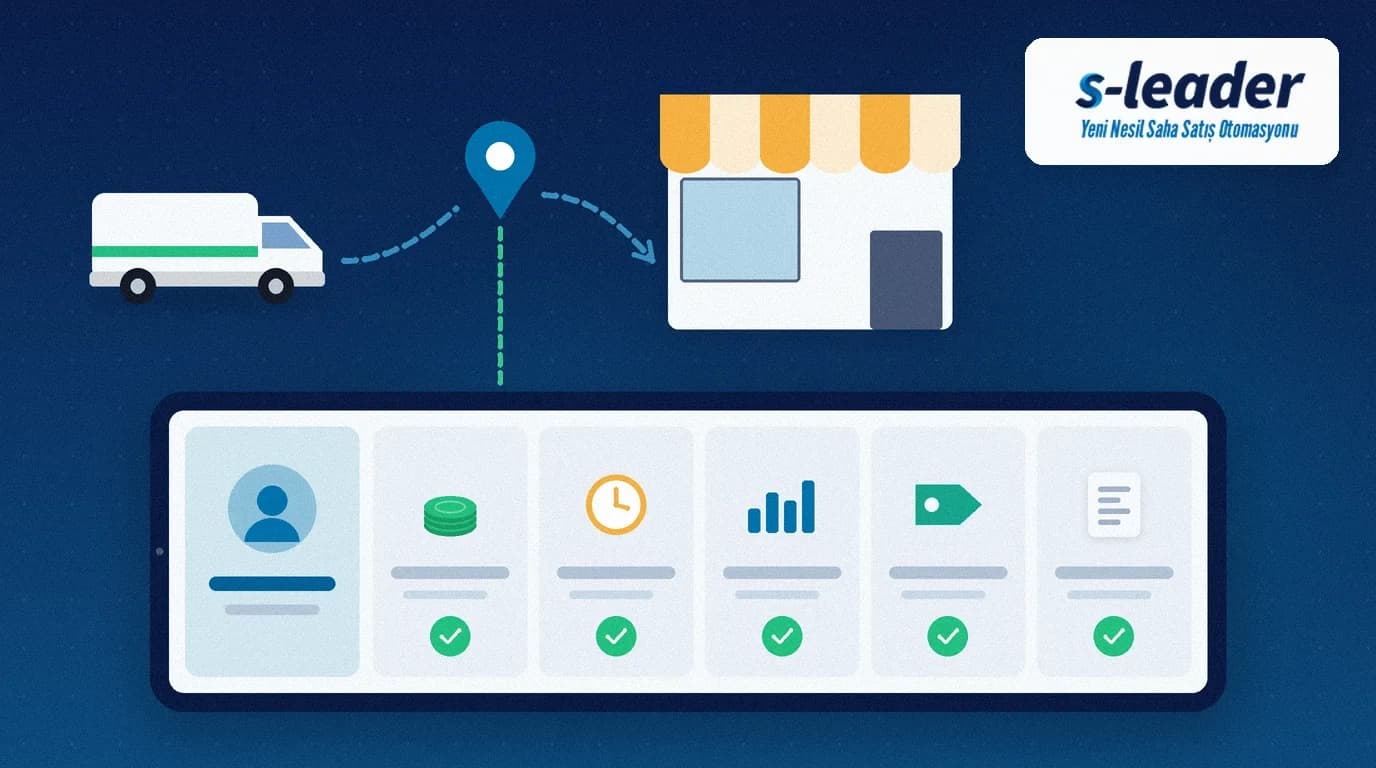
In short: Pre-visit preparation means the field rep reviews the customer's account balance, overdue and upcoming collections, past orders, current campaigns and the last visit notes before the visit. It takes only a few minutes, yet it makes the purpose of the visit clear: the rep walks in knowing what to sell, what to collect and which open issue to close.
On an unprepared visit, the rep looks up the balance on the phone in front of the customer, tries to remember last month's order and learns about a campaign from the customer. The customer notices. And when the visit ends, an overdue cheque has not been mentioned. Preparation moves this confusion to before the visit and frees the conversation for the customer's needs.
What is pre-visit preparation?
Pre-visit preparation is checking the financial, commercial and past-visit information of a customer before a visit and deciding on the goal of that visit.
Preparation is different from the record you fill in during the visit. We explained what to record during a call in our article on the field visit report. Preparation is the step before that report: what to do is decided before the visit.
6 things to check in pre-visit preparation
1. Account balance
The customer's current balance shapes how the order is discussed. Before proposing a new order to a customer with a high balance, you may need to raise payment first. If your company has risk and credit limit rules, the rep should know them before the visit.
2. Overdue and upcoming collections
Overdue invoices and upcoming cheque and promissory note due dates should be on the visit agenda from the start. A rep who leaves collection to the end of the visit often never raises it. We covered how to manage cash, cheques and transfers in our article on field sales collection tracking.
3. Past orders and sales
Looking at the customer's recent orders shows which products may be running low and where the order rhythm has changed. If a regularly ordered product is missing from the last order, asking why becomes one of the topics of the visit. We explained proposing quantities from past sales in our article on the suggested order.
4. Current campaigns
The rep should know the right campaign for the customer before the visit. Seeing a campaign for the first time while entering the order means missing the chance to present it. Agree with head office which campaign applies to which customer group.
5. Last visit notes
A promise made on the previous visit, a complaint or a requested sample are the first things to ask about on this visit. A rep who walks in without reading the notes asks the same question again and damages the customer's trust.
6. Route and visit order
The day's route also affects how much preparation each customer needs. Putting a customer who needs a long conversation into the busiest hour disrupts that visit and the ones after it. You can find how to plan the route in our article on field sales route planning. If you are heading to areas with weak coverage, downloading the map to the device in advance is part of the preparation; the Google Maps Help page explains how to download areas and navigate offline.
A 5-step morning preparation routine
1. Open the day's route
Before you start, look at the day's visit list and its order. If the order has changed, find out why.
2. Write one goal per customer
Set a one-sentence goal for each visit: collect a payment, introduce a new product, complete a missing order or close a complaint.
3. List the collections
Note the overdue and upcoming collections to discuss during the day, customer by customer. That way the payment is discussed at the start of the visit.
4. Check campaigns and stock
Make sure the products you will propose are in stock and the campaign conditions are current. Proposing a product that is out of stock disappoints the customer.
5. Read open promises and notes
Read the last visit notes and announcements from head office. If you promised the customer something, take the answer with you.
The manager's role
Preparation is the rep's job, but providing the right information on time is head office's job. If balance and collection data are not current, the campaign list is late or the route changes at the last minute, the rep's preparation is wasted. The manager should make sure the information needed for preparation is ready on the rep's device in the morning and review the visit goals against the results at the end of the day.
Common mistakes
Preparing in the van, at the customer's door: Last-minute preparation is rushed and difficult topics such as collection get skipped.
Focusing only on sales: Proposing an order without seeing the balance and collections can create a receivables problem that is hard to solve later.
Not keeping notes: The most valuable source of preparation is the last visit note. Without notes, every visit starts from zero.
Carrying information on paper: A list printed in the morning is out of date during the day. Balance and collection data must come from a current source.
Pre-visit preparation with S-Leader
In the S-Leader field sales app, the field team accesses account balances, past orders and sales information instantly in the field. Customer debt movements and overdue and upcoming collections are shown in the field, and cheque and promissory note due dates and amounts are calculated automatically. Current campaigns are shown to the field team in advance while taking orders. Daily visit routes are created and the visit order that finishes in the shortest time is calculated automatically. Urgent announcements are delivered with push notifications. S-Leader is integrated with Logo and Mikro ERP. At ÇAP Teknoloji we set up your preparation routine together with your team. For a free demo, get in touch.
Summary
Pre-visit preparation lets the rep go to the customer with a clear purpose. Check the balance, overdue and upcoming collections, past orders, campaigns, last visit notes and the route. Write one goal per visit, put collection at the start of the conversation and always read information from a current source.
Sıkça Sorulan Sorular
How long should pre-visit preparation take?
It depends on the number of customers and the purpose of each visit. What matters is checking balance, collections, past orders, campaigns and the last note for every visit and writing a one-sentence goal.
What is the difference between pre-visit preparation and a visit report?
Preparation happens before the visit and sets its goal. The visit report records what happened during and after the visit. The notes in the report are then used to prepare the next visit.
When should a rep discuss payment during a visit?
If there is an overdue payment, raising it at the start of the visit keeps it from being forgotten at the end. Agree your company's collection and risk rules with the rep in advance.
How do you prepare for areas with weak mobile coverage?
Prepare where the connection is good, before the day starts, and download the map to the device in advance if needed. Also check the offline features of your field sales app.