
Merchandising Tracking: How Field Teams Audit Shelves and Displays
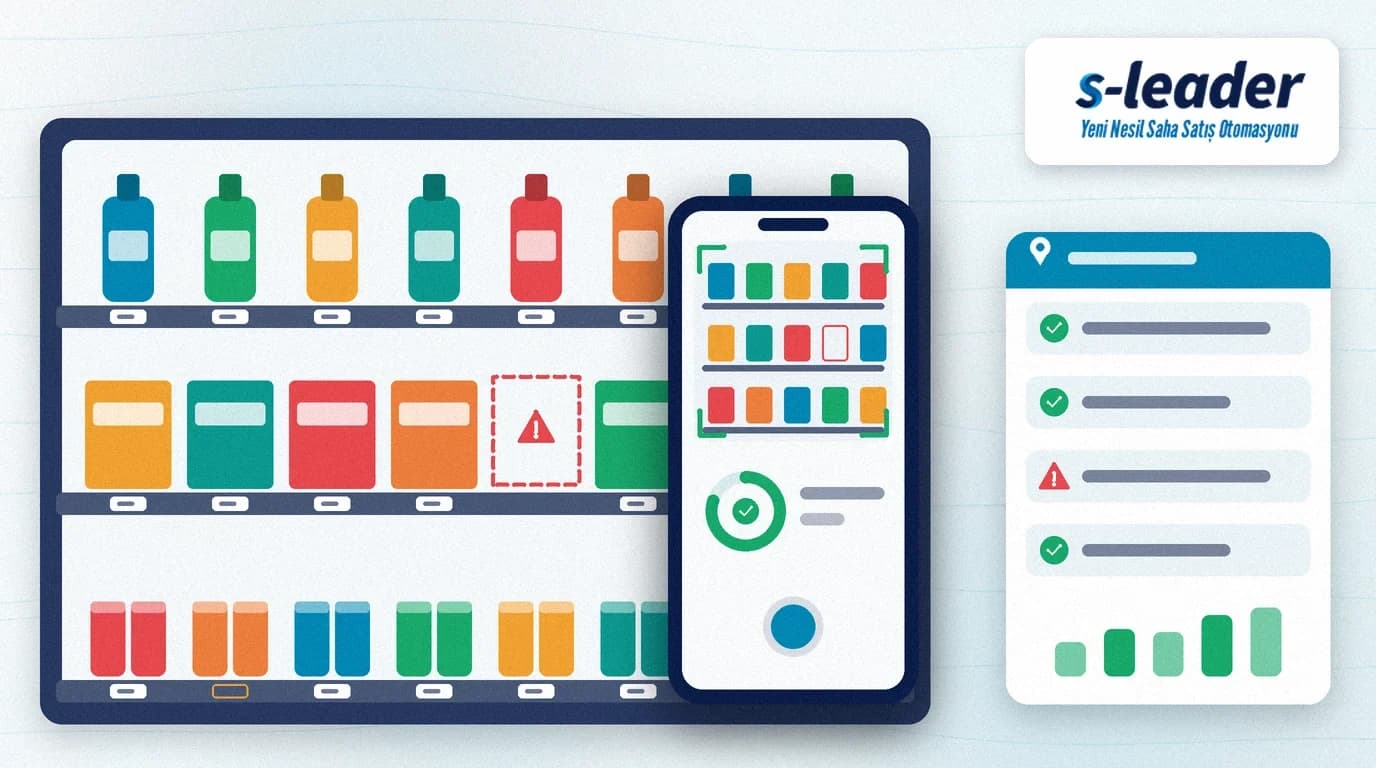
In short: Merchandising tracking means the field team audits shelf layout, product placement, price tags and displays during store visits with a standard checklist and records the result with photos. The goal is to answer “what is really on the shelf?” with visit data instead of guesswork and to fix gaps the same day.
A product has to be visible on the shelf, in the right place and at the right price before it can sell. A rep may leave a store happy with an order; but if the stock stays in the back room, the price tag is missing or the promotional display was never set up, that order will not repeat in the following weeks. Merchandising tracking makes this invisible loss measurable.
Key takeaways
- Merchandising tracking = auditing shelf, price, display and stock visibility on every visit.
- Use the same short checklist and before/after photos on each visit.
- Gaps (empty shelf, wrong tag, missing display) must turn into same-day actions.
- Track results as KPIs by store, rep and product group.
What Is Merchandising Tracking?
Merchandising tracking is the regular check of whether products are displayed at the point of sale according to the agreed standard. That standard usually consists of a planogram (shelf layout plan), share-of-shelf targets, price tag rules and display agreements for promotion periods. The audit is sometimes done by a dedicated merchandising team, but most often by the sales rep during the visit.
Audits done with paper forms and photos sent over messaging apps work for a few stores; across hundreds of outlets you cannot see which store is missing what, who fixed it and whether the problem keeps coming back. A checklist tied to the visit record in a mobile app removes that chaos.
What Should the Field Team Check on the Shelf?
Keep the checklist short; a form that cannot be completed in a ten-minute visit is either skipped or ticked from memory. For most companies these points are enough:
1. Availability and empty shelves
Are the listed products on the shelf or waiting in the stockroom? An empty slot (out-of-shelf) is the most direct sign of lost sales and should be marked with a photo.
2. Placement and share of shelf
Are products in planogram order and at eye level? Does the number of facings meet the agreed share of shelf? Have competitor products spilled into your space?
3. Price tags
Does every product have a tag, is the price current and is the promotional price shown correctly? A gap between the tag and the till price is both a customer complaint and a brand trust problem.
4. Displays and promotional materials
Has the agreed stand, floor display, shelf strip or poster been set up in the right place? During promotions, handle this check together with field sales promotion and discount management; otherwise the discount is granted but the visibility never happens.
5. Expiry dates and product condition
Are there products close to expiry at the front, damaged packaging or dusty items? These findings feed return and rotation decisions.
How to Add Merchandising Tracking to the Visit Flow
The most efficient approach is to make the audit a step of the existing visit rather than a separate task. The rep checks in at the store, completes the short checklist, photographs the gaps, fixes them where possible, takes an “after” photo and then moves on to the order. That way an empty-shelf finding turns directly into an order suggestion.
Set the audit frequency by store importance: high-revenue chain stores weekly, small outlets less often. Building this frequency into field sales route planning means the audit adds no extra travel or time. We explained how visits and check-ins are recorded in our article on the field sales rep tracking system.
Which Metrics Should You Track?
- Shelf compliance rate: what share of checklist items passed?
- Out-of-shelf rate: in how many visited stores was at least one listed product missing from the shelf?
- Price tag accuracy: share of products with missing or wrong tags.
- Display execution rate: share of stores where the agreed stands and materials were set up.
- Time to fix: time from detecting a finding to closing it.
Seeing these indicators on the same dashboard as order and visit metrics shows which stores have low sales because of shelf problems. For the full metric set, see our article on field sales team KPIs.
Common Mistakes
- Forty-item forms: the team loses time in the store and data quality drops.
- Audits without photos: a “compliant” tick cannot be proven, and you have no record in a dispute.
- Findings that are never followed up: the same empty shelf is reported every week but nobody acts.
- Using results to punish reps: the team starts hiding problems.
With S-Leader you can add the merchandising checklist to the visit flow and follow photo-backed findings by store and rep in the BackOffice. Shelf reality then sits in the same place as your order data.
Sıkça Sorulan Sorular
Is merchandising tracking the same as a planogram?
No. A planogram is the plan showing how products should be arranged on the shelf; merchandising tracking is the regular audit of whether that plan and other standards such as pricing and displays are actually applied in the store.
Should the sales rep do the audit or a separate team?
It depends on scale. In most distribution companies the rep audits during the visit with a short checklist; for large chain stores or busy promotion periods a dedicated merchandising team can make more sense.
Why are photos so important?
A photo proves the finding, lets managers see the situation without visiting the store and allows a before/after comparison. A “compliant” tick without a photo cannot be verified.
Which metric should I start with?
Out-of-shelf rate and shelf compliance rate deliver results fastest. Price tag accuracy, display execution rate and time to fix can be added next.